
Early Childhood Education
There are three teachers of children: Adults, other children and their physical environment.
Loris Malaguzzi


In my Early Years classroom, I use the Primary Years Program (PYP) framework to guide each child’s learning journey. Through guided and unstructured play, I encourage exploration while fostering skills like problem-solving, collaboration, and negotiation. My approach nurtures imagination, physical development, cognitive growth, and emotional resilience, supporting each child’s unique potential and laying the foundation for lifelong learning.
My teaching practice is inspired by the Reggio Emilia philosophy, which recognizes that children have many ways to express themselves, learn, and understand the world. I embrace this concept by creating an environment that nurtures and celebrates the diversity of each child's expressions. I believe it is my duty to provide children with the space, time, and resources they need to explore and communicate in their unique ways, viewing each child as a capable learner with their own distinct perspectives.


I believe that every child is unique, with individual needs and interests. To honor this, I take the time to truly get to know each child, allowing me to plan and tailor learning experiences through play, exploration, project-based work, and hands-on activities in varied environments. I design my classroom to foster a sense of community and belonging, ensuring that every child feels included. When children feel valued and accepted, they are more likely to engage actively in the learning process.
I view the environment as a vital component of my teaching practice. I am intentional about setting up learning spaces that highlight the interconnectedness of the physical space, materials, and the children's learning journeys. I collaborate with my children to co-create these environments, fostering collaboration, exploration, wonder, and inquiry. By guiding the design of our learning spaces based on the children's interests, I ensure that these spaces continue to remain dynamic and ever-evolving.


Hydroponics for Edible Education
Introduced and led an innovative hydroponics program in the Early Years curriculum, immersing children in hands-on investigations of plant biology, food systems, and sustainability. The initiatuive bridged classroom learning with community engagement through creative culinary explorations and authentic experiential learning, fostering inquiry, agency, and purposeful action aligned with the Primary Years Programme.


Tech-Integrated Early Learning
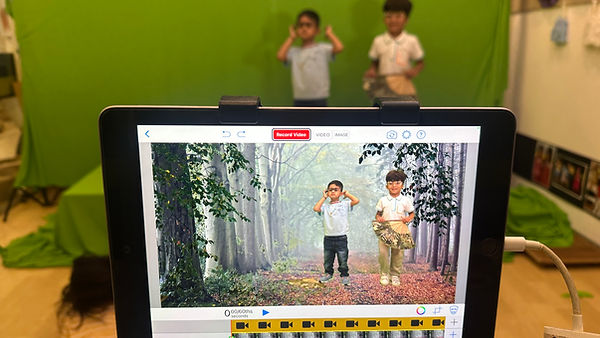
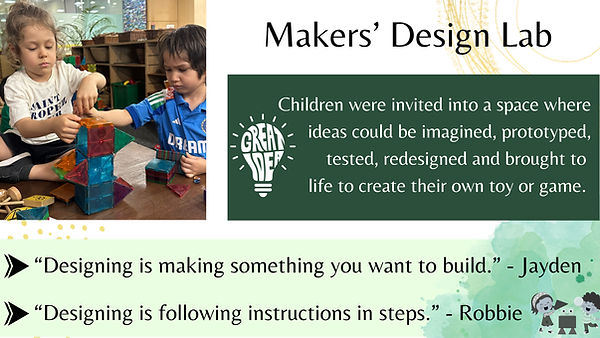
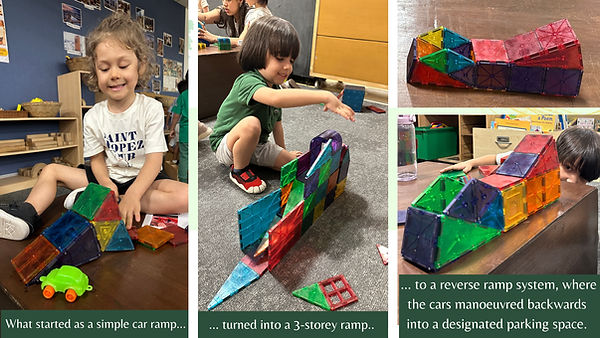
Conceptualised tech-integration within the Early Years program, delivering a series of specialised sessions, creating meaningful opportunities for children to explore, create, and think critically. Using tools such as Green Screen, Bots Coding, and the Design Lab, each experience was designed to immerse children in storytelling, problem-solving, and hands-on innovation, preparing them for a future-ready mindset.



Inquiry-based Explorations
Curated inquiry-based explorations that encourage children to follow their interests, ask questions, and discover through hands-on experiences. Aligned with the Primary Years Programme, this approach leverages observation and documentation to foster individualized growth, cultivate student autonomy, and create authentic, real-world learning experiences while deepening family engagement.


